



The Complete Guide to Digital Marketing for Educational Institutes
Digital marketing for educational institutes is the practice of using search, paid advertising, content, social media and email to attract prospective students and turn their interest into enrollment inquiries. Done well, it replaces unpredictable word of mouth and expensive print advertising with a measurable system, where you know what each inquiry costs and which channels produce them. Branding matters too: a school’s logo, website and voice set the level of trust before any campaign runs.
This guide covers the full strategy: how families and students research schools today, which channels matter at each stage, and how to build a digital marketing strategy for educational institutes that compounds over time. If you would rather have an agency run it, see our education marketing services.
Why educational institutes need a different marketing playbook
Education is a high-consideration decision with a long research cycle. A parent choosing a private K-12 school or a student comparing degree programs doesn’t click one ad and enroll — they research for weeks or months, compare options, read reviews, visit websites repeatedly, and talk to other families before ever filling out an inquiry form.
That changes the marketing math in three ways:
• Visibility must be persistent, not episodic. A two-week enrollment push can’t reach a family that started researching four months earlier. You need always-on presence in search and social.
• Trust signals carry more weight than offers. Reviews, outcomes, faculty credentials, and authentic student stories move enrollment decisions more than discounts ever will.
• Multiple decision-makers are involved. In K-12, parents decide; in higher education, students decide with parent input; in corporate training, HR and department leaders sign off. Each audience needs its own message.
A generic campaign treats all of these as one audience. A real digital marketing strategy for educational institutes segments them from the start.

The five channels that drive enrollment
1. Search engine optimization (SEO)
When a family searches “private schools near me” or a student searches a program name plus “requirements,” the institutions on page one get the visit — and the inquiry. SEO for education means:
• Program-level pages optimized for the terms people actually search (program name + location, “requirements,” “cost,” “reviews”)
• Local SEO — a complete Google Business Profile, consistent listings, and steady reviews, because education searches are heavily local
• Technical health — fast pages, mobile-first design, and structured data so search engines (and now AI assistants) can read and cite your content
SEO is the highest-ROI education channel over time because rankings compound: the page that ranks this semester keeps producing inquiries next semester at no additional cost. Our SEO services team builds these programs for institutions across NJ, NYC, and CT.
2. Paid advertising (PPC and paid social)
Paid campaigns are the fast lane — they generate inquiry volume within weeks, which makes them the right tool for enrollment deadlines, new program launches, and open-house promotion. The essentials:
• Search ads on program and comparison keywords capture in-market families at the moment of intent
• Geo-targeting keeps spend inside your real enrollment radius
• Retargeting re-engages website visitors who researched but didn’t inquire — critical in a long decision cycle where almost nobody converts on the first visit
The discipline that separates profitable education campaigns from wasteful ones is conversion tracking: every dollar should be traceable to an inquiry. That’s the core of our digital advertising approach.
3. Content marketing for education
Content marketing for education means answering the questions your prospective students and families are already asking — in guides, blog posts, program explainers, and FAQ pages. It works because education decisions are research-heavy: the institution that provides the most helpful answers earns both trust and search visibility.
High-performing education content includes:
• Decision-stage guides (“How to choose a…”, “X vs. Y program,” cost and financial-aid explainers)
• Outcome stories — alumni results, placement outcomes, student projects
• Program deep-dives that answer requirements, timelines, and career-path questions
This is also the foundation of inbound marketing for higher education: instead of interrupting people with ads, your content brings them to you already interested. Every strong piece feeds SEO, gives your social channels something worth posting, and nurtures your email list.
4. Social media
Social proof is enrollment currency. Prospective students check an institution’s Instagram and TikTok the way employers check LinkedIn — for signs of real life and real outcomes. What works:
• Authentic student-life content over polished brochure-ware — short-form video consistently outperforms static posts
• Platform fit — TikTok and Instagram for students, Facebook for parents, LinkedIn for corporate and continuing education
• Community management — answered DMs and comments are part of the admissions funnel, not an afterthought
Our social media marketing team builds education content calendars around the academic year, so the right message lands at each enrollment stage.
5. Email marketing and automation
Email is where education marketing converts. Inquiries rarely enroll on day one — a nurture sequence keeps your institution present through the entire decision cycle: welcome series for new inquiries, event invitations, deadline reminders, and re-engagement for stalled applications. It’s important enough that we wrote a dedicated guide: email marketing for educational institutions. (And our email marketing services team builds these systems end to end.)
Building the strategy: a 90-day starting framework
Weeks 1 to 2: Foundation
Weeks 3 to 4: Tracking and quick wins
Months 2 to 3: Channel build-out
Ongoing: Measure and reallocate
How to measure success
| Metric | Why it matters |
|---|---|
| Inquiries (form fills + calls) | The real output of marketing |
| Cost per inquiry, by channel | Where to put the next dollar |
| Inquiry-to-application rate | Reveals nurture and admissions handoff quality |
| Organic rankings + traffic | Leading indicator of compounding SEO value |
| Application-to-enrollment rate | Connects marketing to revenue |
Frequently asked questions
How much should an educational institute spend on digital marketing?
It depends on your institution, your local competition and your enrollment goals. The better question is cost per enrolled student: when you know your tuition value and your inquiry-to-enrollment rate, you can set a budget from the math instead of guessing.
How long does it take to see results?
Paid campaigns can start producing inquiries soon after launch, once tracking and landing pages are in place. SEO and content marketing usually take 3 to 6 months to gain traction, with compounding results after that. A blended strategy delivers both near-term inquiries and the long-term cost advantage.
Should we run marketing in-house or hire an education marketing agency?
In-house teams bring institutional knowledge. An agency brings channel depth across SEO, paid, content, social and email, plus benchmarks from other institutions. Many institutes land on a hybrid: in-house owns brand voice and community, the agency runs the technical growth channels. If you are evaluating partners, here is what we do for schools and colleges: education marketing at LO Media.
What's the single highest-impact place to start?
Tracking and search. Make sure every inquiry (form and phone) is measured, then capture the demand that already exists from people actively searching for what you offer. Everything else builds on those two.
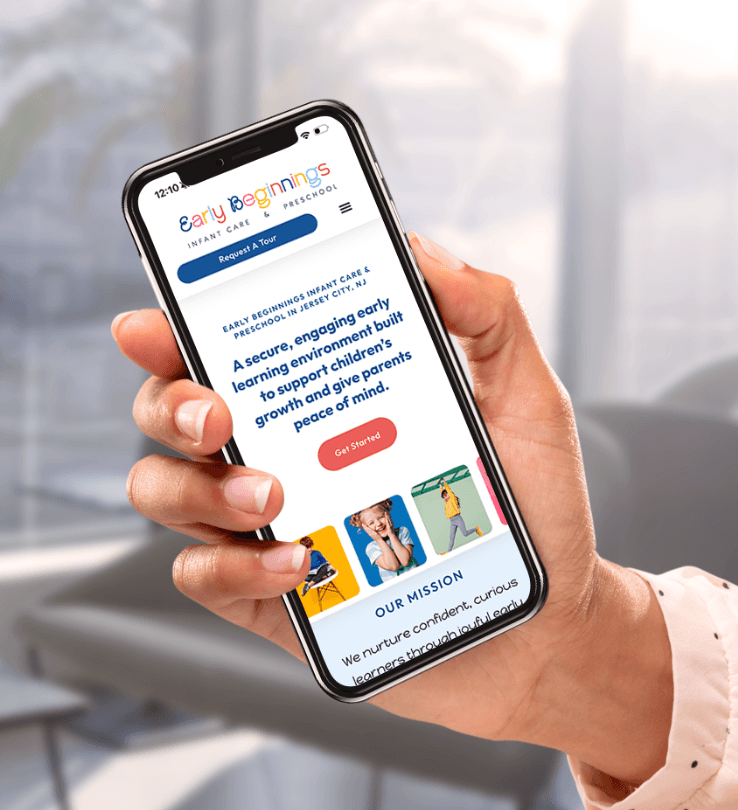
LO Media Agency is an education marketing agency in Tappan, NY, serving schools and education companies across New York, New Jersey and Connecticut. Our education work includes a rebrand and website for Early Beginnings Day Care & Preschool and video production for St. Thomas Aquinas College, Westchester Culinary Tech Center and BOCES at North Rockland High School. See our education marketing services or get in touch.
Related guides: private school marketing, higher education marketing strategies, email marketing for educational institutions and marketing for continuing education programs.