


CGI Marketing:
The Revolution Reshaping How Brands Advertise
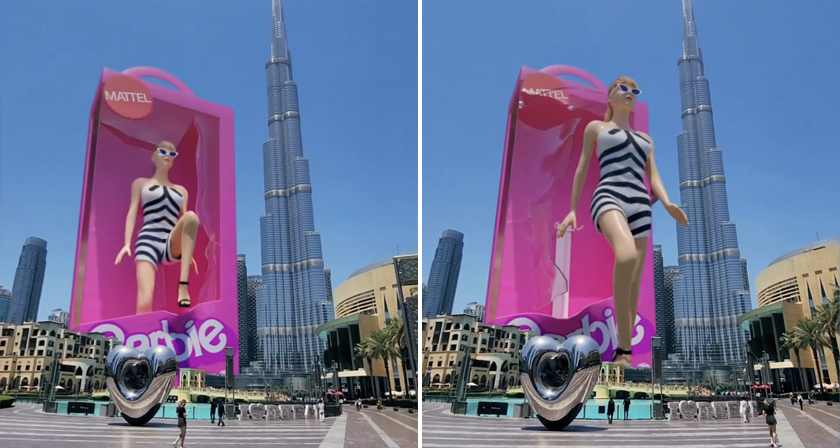
A milk carton the size of a skyscraper pours itself over a New York street. A pair of giant lashes sweeps across the top of a moving train. A handbag the height of a building rolls through Paris. None of it is real — and that’s exactly the point.
CGI marketing is the use of computer-generated imagery to create hyper-realistic, physically impossible brand visuals that stop the scroll and spread on their own. Over the past two years it has gone from a niche VFX trick to one of the most shared formats in advertising, powering viral campaigns for beauty, fashion, auto, and consumer brands. This guide breaks down what CGI marketing actually is, how it differs from FOOH, why it works, the campaigns that defined it, and how to launch one for your own brand.
What is CGI marketing?
CGI marketing (also written “marketing CGI”) is advertising built around computer-generated imagery — 3D-rendered objects, environments, and effects composited into real-world footage or built entirely from scratch. Instead of filming a product as it exists, brands render a version of reality that would be impossible, dangerous, or wildly expensive to shoot for real.
In plain terms: CGI lets a brand show the unshowable. A car driving up the side of a building. A perfume bottle erupting from the ocean. A sneaker forming out of a sandstorm. Because the visuals defy physics, viewers stop, rewatch, and share — which is the entire goal of social-first advertising.
CGI meaning in marketing, in one line: using 3D rendering to create scroll-stopping, impossible-in-real-life brand visuals designed to go viral on social platforms.
CGI marketing vs. FOOH (fake out-of-home): what’s the difference?
The two terms get used interchangeably, but they’re not quite the same:
- CGI marketing is the broad category — any ad built with computer-generated imagery.
- FOOH (“fake out-of-home,” sometimes “faux OOH”) is a specific style of CGI marketing that mimics out-of-home advertising — billboards, transit wraps, building takeovers, public installations — except the installation never physically existed.
So every FOOH ad is CGI marketing, but not every CGI ad is FOOH. FOOH exploded because it looks like a real, jaw-dropping public stunt — viewers assume a brand actually built a giant lipstick on a London bus — which makes the reveal that it’s fake even more shareable.
Why CGI advertising is exploding right now
Several forces converged to make CGI advertising one of the most effective formats on social media:
It’s built for the algorithm.
It’s cheaper than the real thing.
Total creative control.
Earned media on top of paid.
It signals innovation.
Real CGI marketing campaign examples
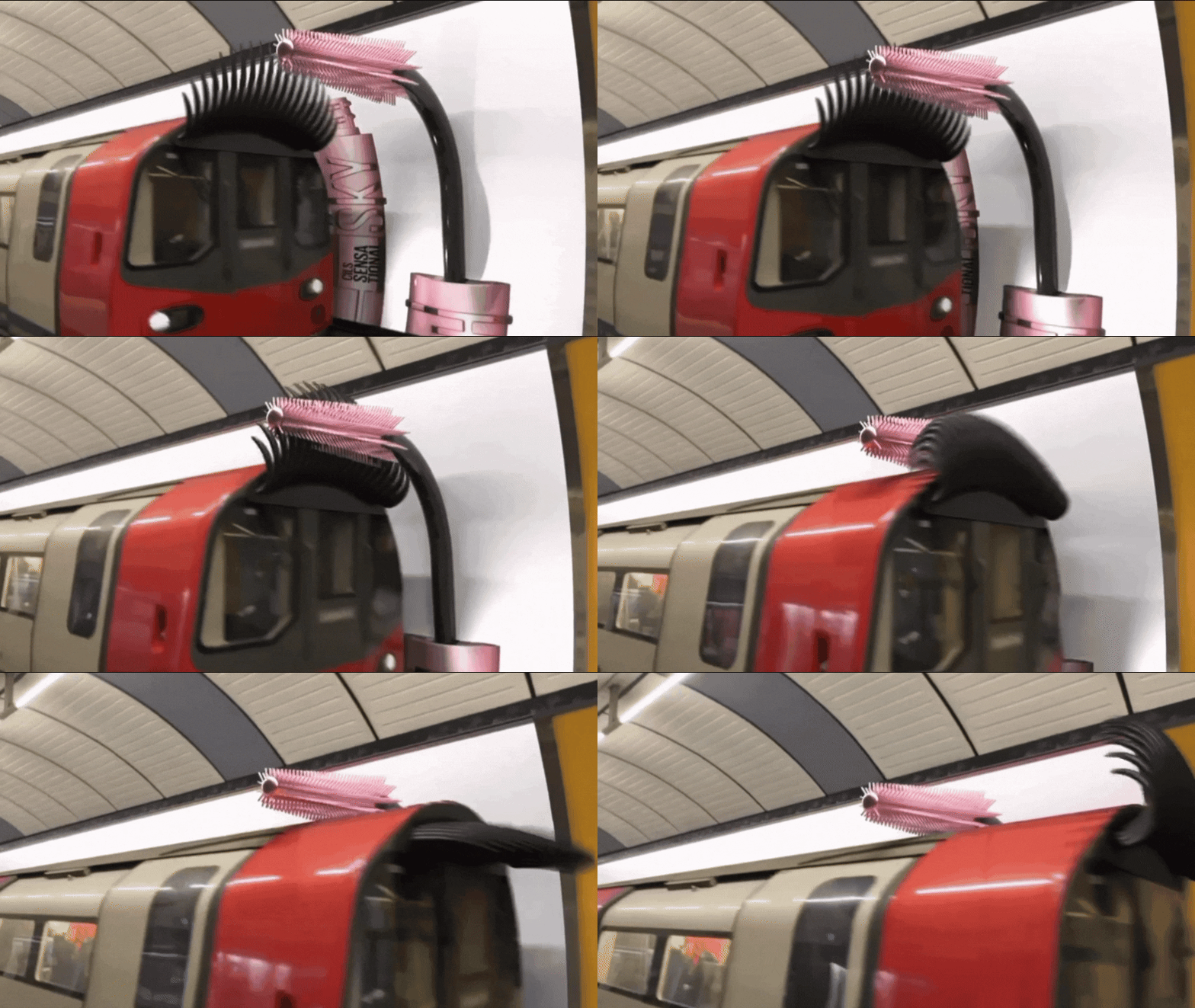
Maybelline ran one of the most-cited FOOH campaigns — giant mascara wands and lashes “applied” to the tops of London buses and trains as they rolled through the city.
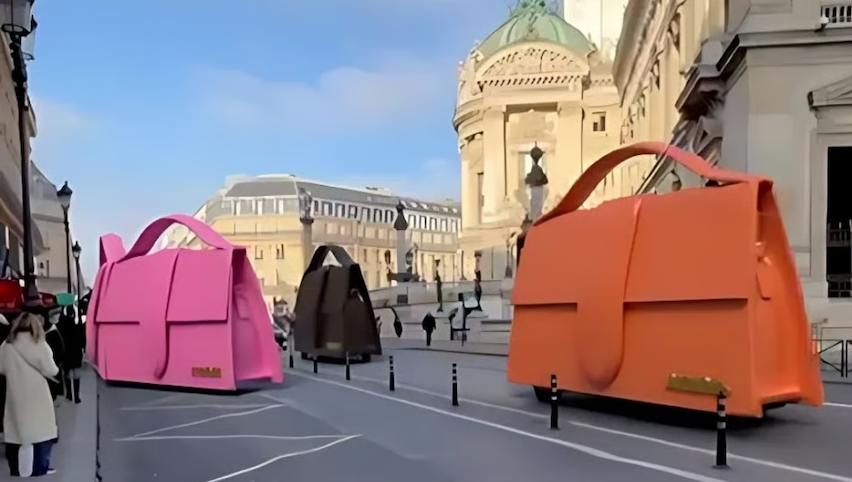
Jacquemus sent oversized handbags rolling like autonomous cars through the streets of Paris — instantly recognizable, endlessly reshared.
Fashion, beauty, and auto brands have since used CGI to stage building-sized products, surreal transformations, and impossible “installations” in landmark city locations.
The common thread: a single hero visual, instantly tied to the brand, that’s impossible in real life and irresistible to share.
How CGI ads actually get made
A CGI campaign moves through a clear production pipeline:
- Concept & storyboard — the single impossible idea, mapped to the brand and the platform.
- 3D modeling — building the product, environment, and effects as digital assets.
- Plate filming (when needed) — shooting the real-world background the CGI will live inside.
- Rendering & compositing — lighting, texturing, and seamlessly blending the CGI into the scene so it reads as real.
- Edit, sound design & delivery — cutting to platform-native lengths and aspect ratios for Reels, TikTok, and Shorts.
The make-or-break stage is compositing — the lighting, shadows, and physics have to be flawless, because the whole effect depends on viewers believing (for a second) that it’s real.
Is CGI marketing right for your brand?
CGI marketing isn’t only for global beauty and fashion houses. It’s a strong fit when:
- Your product is visual and recognizable (you can build a campaign around its silhouette).
- Your audience lives on short-form video platforms.
- You want social-first reach and earned media, not just a traditional TV spot.
- You have a brand moment — a launch, a rebrand, a flagship product — worth a statement piece.
It’s a weaker fit for purely text-driven or commodity offerings where the visual payoff is limited. The right partner will tell you honestly which bucket you’re in.
How to launch a CGI campaign with LO Media Agency
CGI marketing rewards craft. A render that’s almost convincing is worse than no CGI at all — the magic only works when the result is seamless. As a full-service creative and video production team [link: /services/video-production/] serving brands across New Jersey, Connecticut, and New York, LO Media Agency handles CGI campaigns end to end: concept, 3D production, compositing, and the paid social distribution [link: /services/digital-advertising/] that turns a great render into real reach.
If you’ve watched a CGI ad go viral and thought “we should do that” — you’re right, and the window is open now while the format is still fresh.
Frequently asked questions about CGI Marketing
What does CGI mean in marketing?
CGI stands for computer-generated imagery. In marketing, it refers to ads built with 3D-rendered objects, environments, and effects — used to create hyper-realistic but physically impossible brand visuals designed to go viral on social media.
What is FOOH in marketing?
FOOH means “fake out-of-home.” It’s a style of CGI marketing that mimics real-world out-of-home advertising — billboards, transit wraps, building takeovers — except the installation is digitally created and never physically existed.
What are some examples of CGI marketing campaigns?
Maybelline’s giant mascara-wand buses and Jacquemus’s oversized handbags rolling through Paris are two of the most-shared CGI (FOOH) campaigns. Beauty, fashion, and auto brands have widely adopted the format for product launches.
How much does a CGI ad cost?
It varies with complexity — the number of 3D assets, the length, the level of photorealism, and whether real-world plate footage is required. A single hero FOOH clip costs far less than physically building and filming the equivalent real installation, which is part of why brands favor it. The best way to get a real number is a scoped conversation about your concept.
Is CGI marketing the same as AI-generated video?
No. CGI marketing uses controlled 3D rendering and compositing for precise, brand-accurate results. AI-generated video creates footage from prompts and is less predictable for exact brand assets. Many teams combine both, but high-end CGI campaigns still rely on 3D production for control and quality.
Are CGI ads worth it?
For visually driven brands targeting social-first audiences, CGI ads can deliver outsized organic reach and earned media on top of paid spend. The payoff depends on a strong concept and flawless execution — a seamless render is what makes the format work.